Case Study: Building a Scalable Technical Training Ecosystem During Product Transformation
A growing enterprise automation software company was undergoing a significant operational transition.
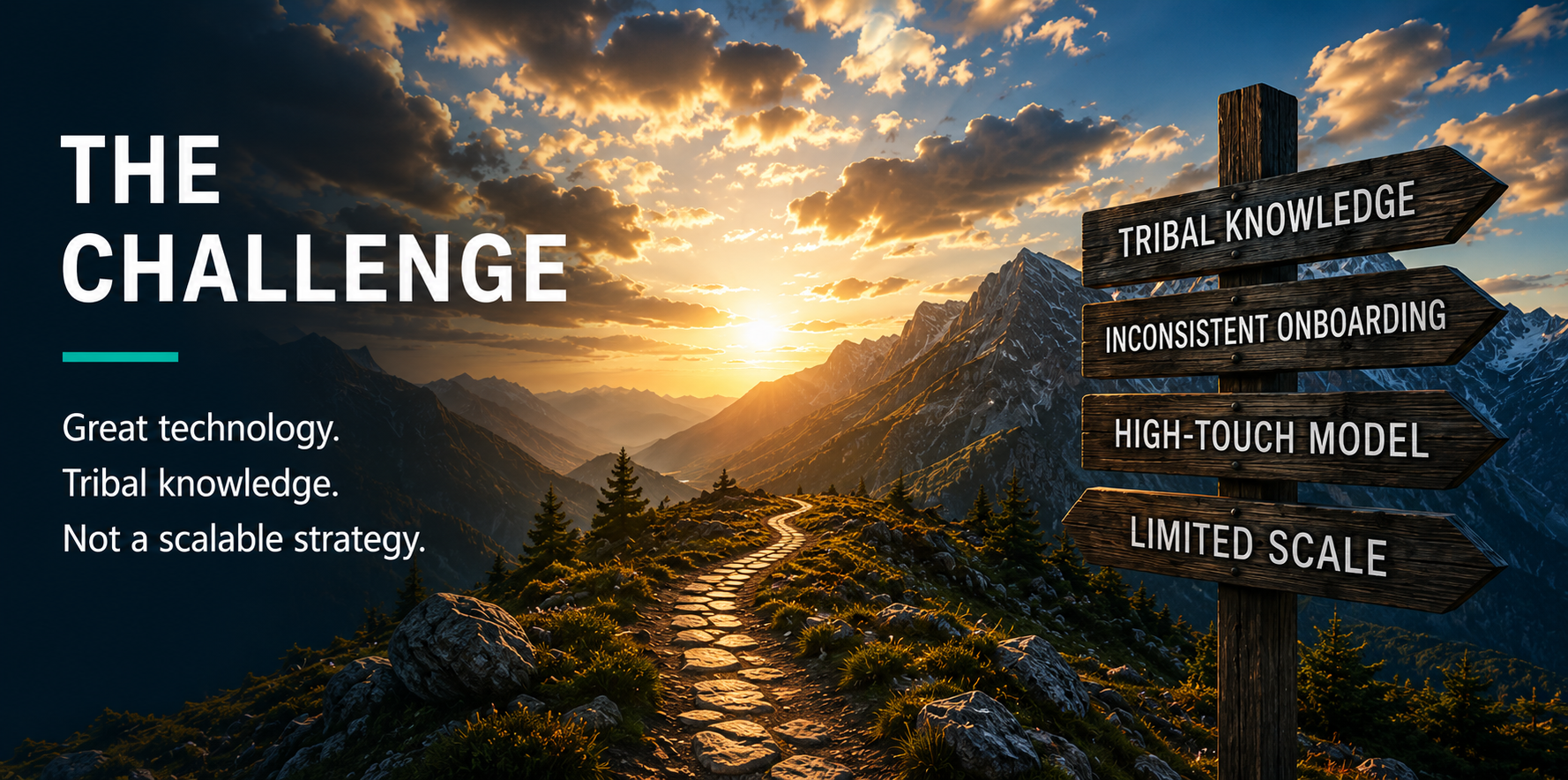
Historically, customer implementations relied heavily on internal experts and highly experienced technical architects. While this high-touch approach supported early growth, it created substantial scaling constraints. Critical product knowledge lived disproportionately with veteran employees, onboarding was inconsistent, and most customer enablement occurred through direct intervention rather than self-service education — effective in the short term, though not especially scalable unless cloning senior architects becomes an approved hiring strategy.
At the same time, the company was expanding its partner ecosystem of implementation firms that sell and deploy the platform to end customers. As the organization shifted from a platform-centric operating model toward a more productized offering, leadership recognized that scalable technical education would become essential.
Previous attempts to expand training had struggled to gain traction, and existing learning materials consisted primarily of foundational video content without structured progression, certification, learner tracking, or a long-term enablement strategy.
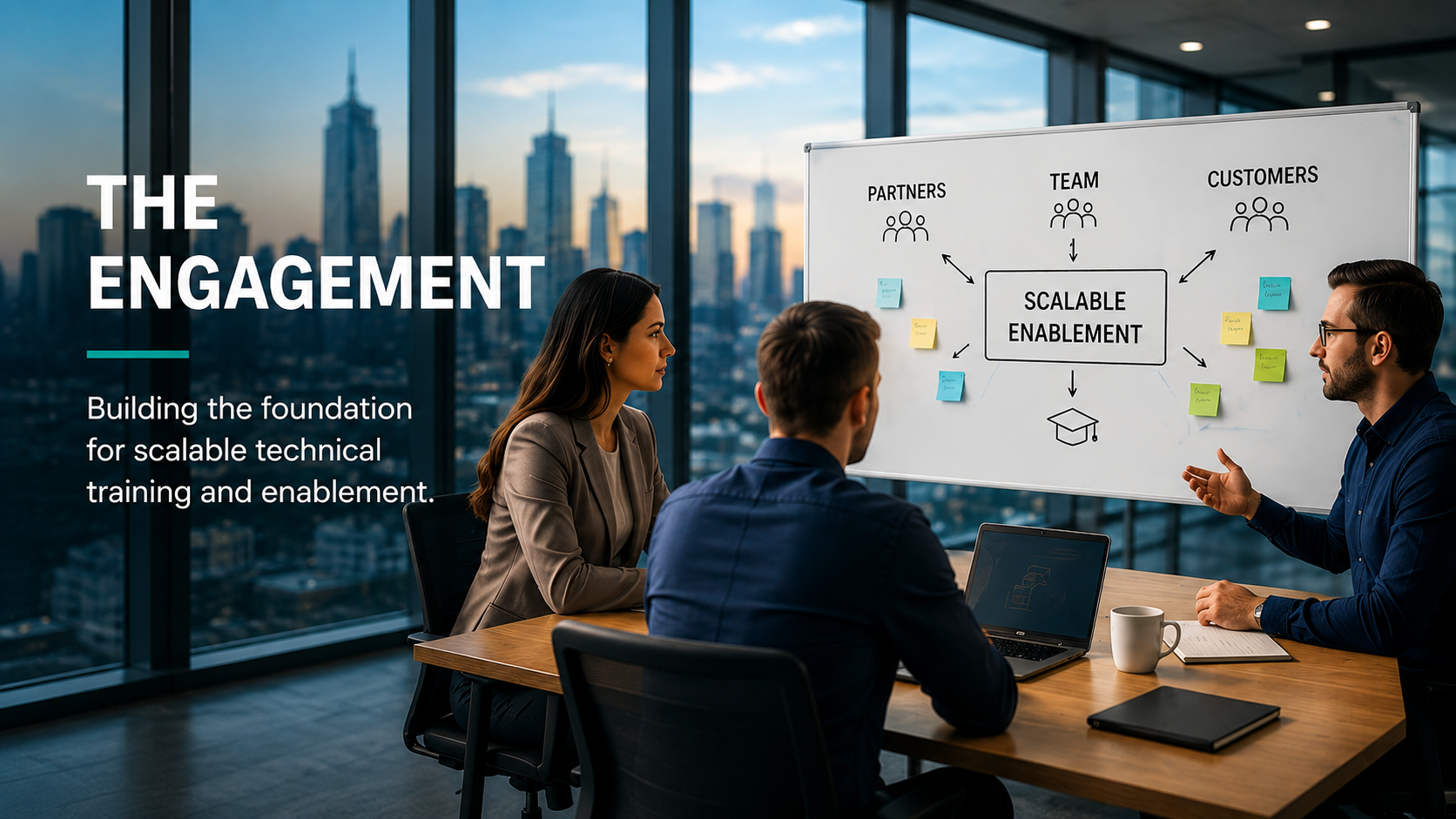
Karellen Consulting was brought in to help establish the foundation for a scalable technical training function.
The initial objective was to expand an introductory training curriculum into a more advanced learning path for technical audiences. Over time, the engagement expanded into broader enablement strategy, capability development, tooling, and organizational planning.
Primary audiences included:
Technical implementation partners
Internal technical support and onboarding teams
Select enterprise customers with advanced technical needs
The common challenge across all audiences was the same: reducing dependency on tribal knowledge and improving scalable technical proficiency.
Training Architecture and Curriculum Design
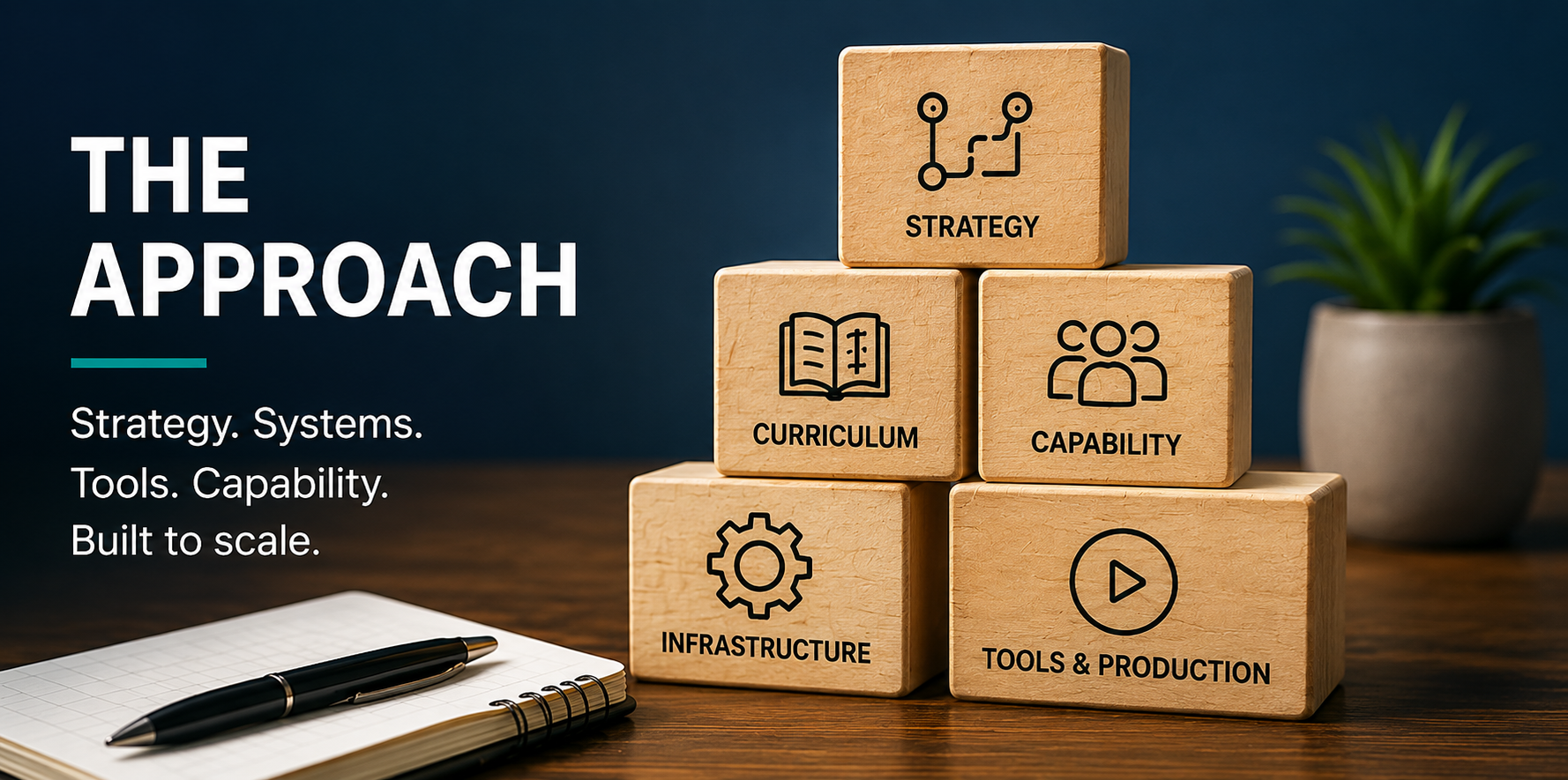
A foundational training roadmap was developed to create a logical progression from introductory platform knowledge to advanced technical implementation skills.
An advanced follow-on technical course was designed to complement existing foundational learning, creating a more structured technical learning journey that could later expand into broader topic-based modules and certifications.
The structure established during this phase later informed revisions to foundational training content and future curriculum expansion.
Internal Capability Building
Rather than outsourcing training creation indefinitely, Karellen Consulting worked closely with the internal content creator and broader enablement team to build long-term capability.
This included mentoring around:
Professional technical training design
Video production quality and delivery standards
Content development workflows
Instructional pacing and technical clarity
Certification program structure
Learning roadmap development
Future enablement team planning
The goal was to create repeatable systems and internal expertise rather than ongoing external dependency.
Enablement Infrastructure
To support scalable delivery, Karellen Consulting selected and implemented the organization’s first learning management system (LMS), establishing a foundation for learner tracking, structured onboarding, and future certification management.
Recommendations were also provided for:
Content creation tooling
Recording hardware and audio standards
Video production workflows
Self-service learning architecture
Scalable enablement operations
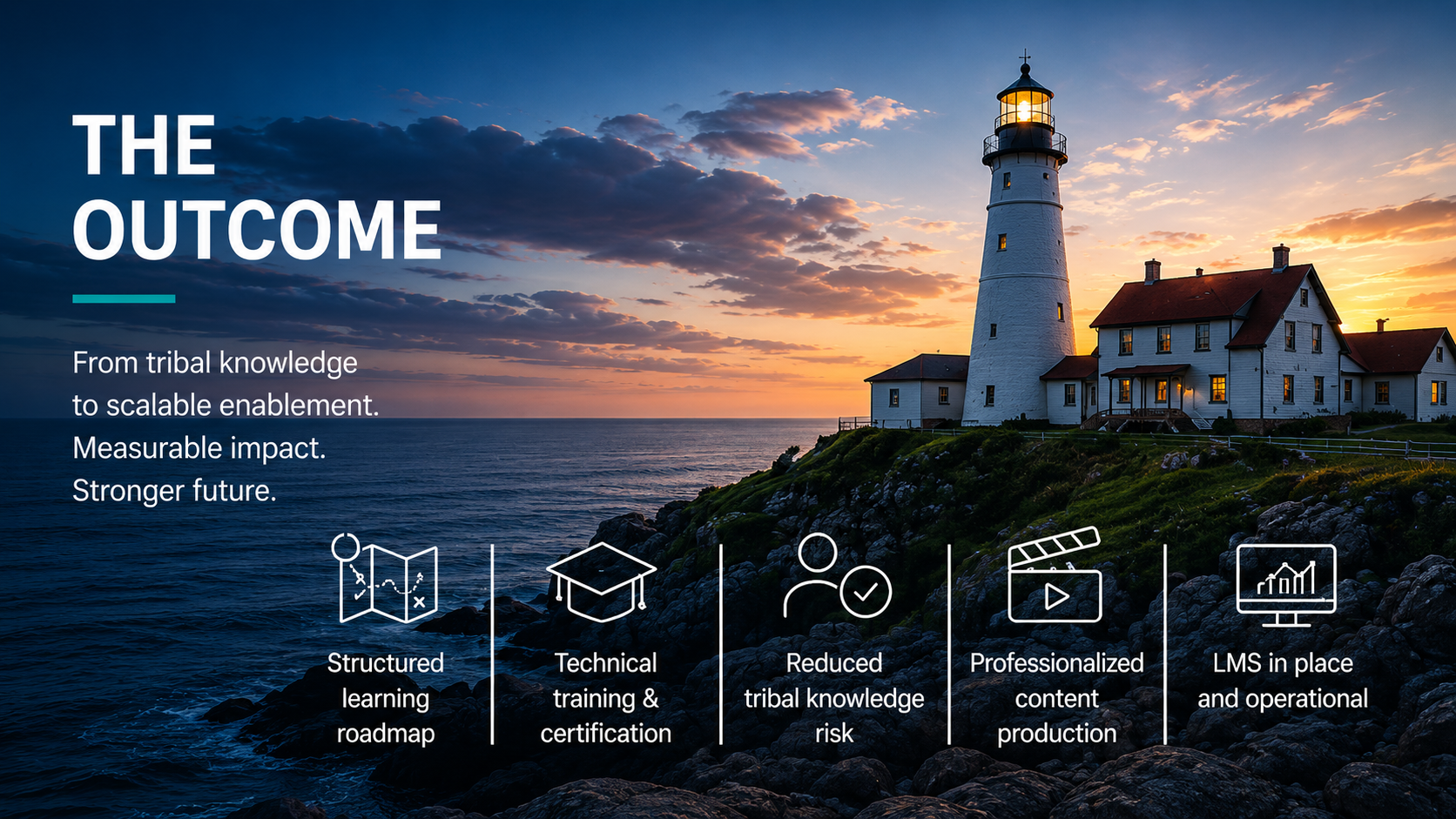
The engagement transformed training from an ad hoc collection of technical content into the foundation of a scalable enablement ecosystem.
Key outcomes included:
A structured technical training roadmap
An advanced technical training program aligned to product complexity
A repeatable framework for future certifications
Reduced reliance on tribal knowledge for onboarding
Professionalized content production standards
The implementation of the organization’s first LMS
Internal capability building for sustainable future expansion
Following completion of the initial content and enablement framework, the engagement paused as the organization shifted focus toward broader company and product changes. The newly designed training architecture aligned with the company’s evolving product strategy and positioned the organization for future enablement maturity.